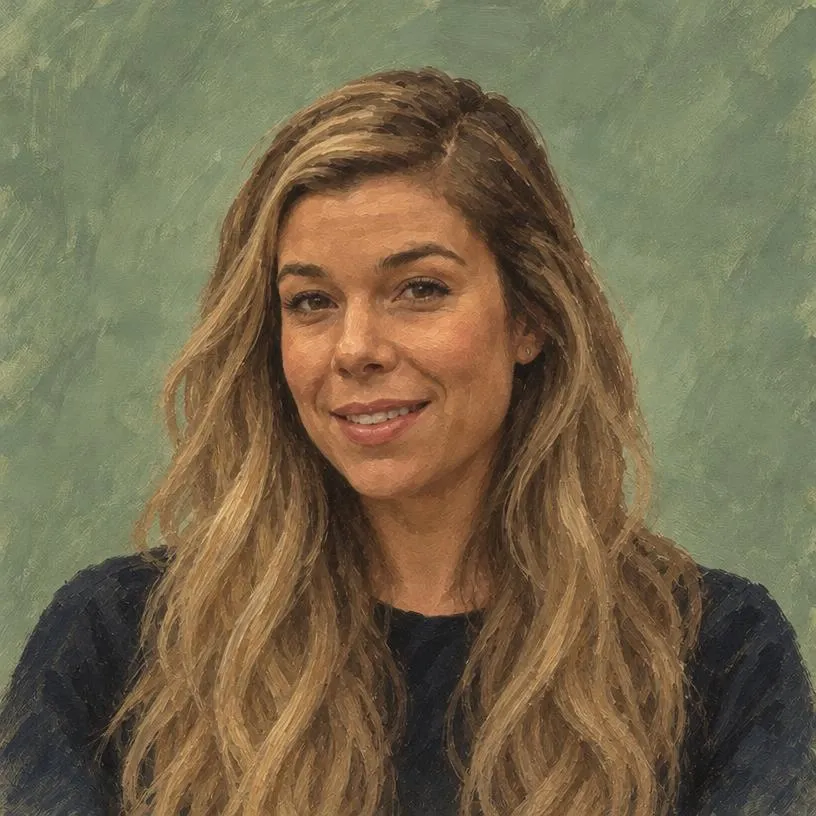
Rhonda Patrick
Biomedical scientist & FoundMyFitness host
Biomedical scientist who explains how nutrition, exercise, sauna and sleep shape how we age, and turns research into everyday choices.
“Small, consistent choices about how you eat, move and rest add up to how you age.”
Listen to story & lessons
The story
Rhonda Patrick's path into health science began in the laboratory rather than in front of a camera. She studied biochemistry at the University of California, San Diego, drawn to the question of what actually happens inside cells when we eat, move, age and get sick. Those early years in research labs taught her to read studies carefully, to respect data over opinions, and to notice how much of what people believed about health was never really tested.
She went on to earn a PhD in biomedical science through the University of Tennessee Health Science Center, doing her research at St. Jude Children's Research Hospital. Her work there looked at mitochondrial metabolism, cell death and cancer, the deep machinery that decides whether cells thrive or fail. Afterward she joined the laboratory of Bruce Ames at Children's Hospital Oakland Research Institute, where she studied how everyday shortfalls in vitamins and minerals might quietly accelerate aging and disease.
That work produced one of her best-known contributions: research with Ames proposing how vitamin D and omega-3 fatty acids help regulate serotonin in the brain, with possible links to mood, behavior and conditions such as autism and ADHD. At the same time she started FoundMyFitness, first as a way to share what she was learning, then as a full podcast and research platform. Long, detailed conversations with scientists, and later her appearances on shows like Joe Rogan's, Peter Attia's and Andrew Huberman's, brought topics like sauna, sulforaphane, micronutrients and exercise to millions of listeners.
Her message has stayed rooted in the lab: the body responds to the signals we give it, every day. Nutrient status, hard exercise, heat, sleep and the foods we choose are not small details but powerful inputs that shape how we age. She also models a habit worth copying, going back to the original studies, explaining their limits, and updating her views when better evidence arrives. Science for her is not a set of rules handed down, but a tool anyone can learn to use for a longer, healthier life.
Accomplishments
- Earned a PhD in biomedical science through the University of Tennessee Health Science Center, researching at St. Jude Children's Research Hospital.
- Completed postdoctoral research with biochemist Bruce Ames at Children's Hospital Oakland Research Institute on micronutrients and aging.
- Co-authored research proposing how vitamin D and omega-3 fatty acids help regulate serotonin in the brain.
- Founded FoundMyFitness, a podcast and research platform translating health science for millions of listeners.
Top 10 lessons
- 01
Close your nutrient gaps before chasing exotic supplements.
Many people fall short on everyday nutrients like magnesium, vitamin D or omega-3s. Those small gaps may quietly affect long-term health. Before buying a shelf of supplements, make sure the basics in your diet are actually covered.
- 02
Check your vitamin D and omega-3 levels instead of guessing.
You cannot feel your vitamin D or omega-3 levels. A simple blood test tells you where you stand, so you can adjust food, sun exposure or supplements with your doctor instead of guessing.
- 03
Make vigorous exercise a regular part of your week.
Exercise that leaves you breathing hard, even in short bursts, strongly supports heart health and fitness. Mix vigorous sessions with steady movement through the week, at a level that suits your health.
- 04
Treat exercise as medicine for the brain, not only the body.
Movement does more than build muscle. It supports mood, memory and the growth of brain connections. When you feel low or foggy, a brisk walk or workout can be one of the quickest ways to feel clearer.
- 05
Use heat, like the sauna, as a form of healthy stress.
Regular sauna use has been linked in large studies with better heart health. Heat is a mild stress that the body adapts to. Start short, stay hydrated, and check with a doctor if you have health conditions.
- 06
Eat plenty of colorful plants, especially cruciferous vegetables.
Broccoli, broccoli sprouts, kale and other colorful plants contain compounds such as sulforaphane that support the body's own defenses. Fill much of your plate with a variety of vegetables, fruits and greens.
- 07
Get enough protein, and keep it up as you age.
Protein helps you build and keep muscle, which becomes more important with age. Spread it across your meals and pair it with strength training to protect strength and independence later in life.
- 08
Guard your sleep to protect your brain.
Sleep is when the brain clears waste and consolidates memory. Keep a steady schedule and a dark, cool bedroom, and treat short nights as a real cost to your health rather than a badge of productivity.
- 09
Limit ultra-processed food and alcohol.
Ultra-processed foods and regular drinking crowd out nourishing food and can strain the body over time. You do not need to be perfect; simply cutting back gives your body a better chance to thrive.
- 10
Read the research yourself and stay curious.
Rather than trusting headlines, look at what a study actually measured and who took part. Stay open to new evidence and willing to change your mind. Curiosity is a lifelong health habit of its own.
Books
- No books yet — start with the interviews.