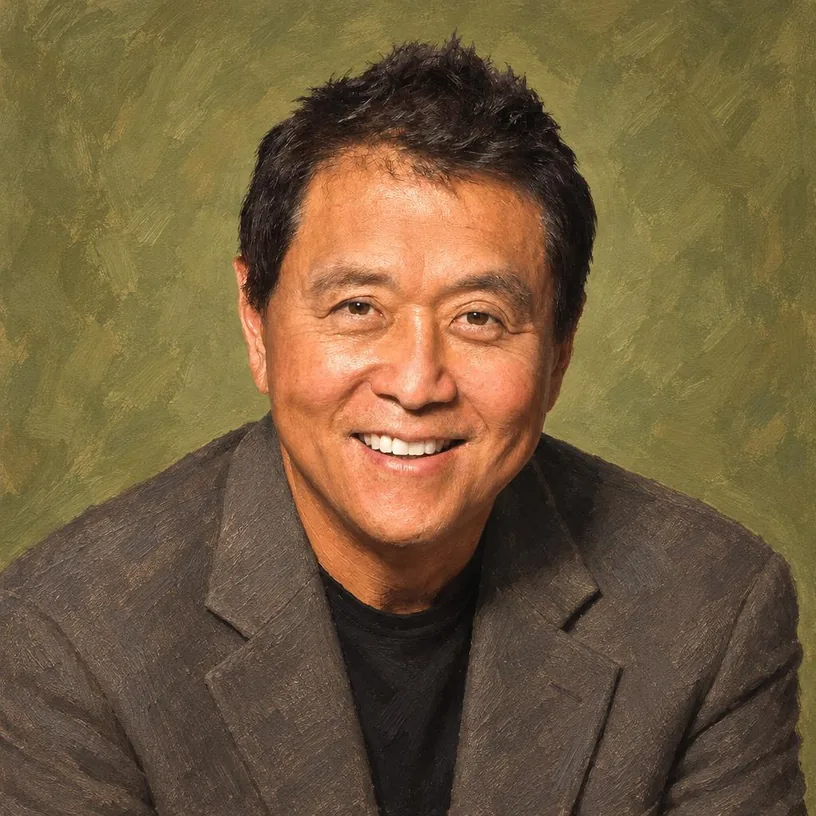
Robert Kiyosaki
Entrepreneur, author
Author whose bestseller reframed how millions think about assets and income.
“It's not how much money you make, it's how much you keep.”
Listen to story & lessons
The story
Robert Kiyosaki grew up in Hawaii between two father figures. His own father was a highly educated teacher, the head of education for the state, who believed in good grades, a safe job and a pension, and who struggled with money all his life. His best friend's father had dropped out of school, built businesses, and became one of the richest men in Hawaii.
As a boy he listened to both men give him opposite advice about work, risk and money, and the contradiction planted the question that shaped his life: if school makes people smart, why did his educated father stay poor while his uneducated one grew rich?
His own road to an answer was winding. He served as a helicopter pilot in the Vietnam War, worked as a salesman at Xerox to learn how to sell, and started businesses, including a company that collapsed and left him with serious debt. Each failure taught him something classrooms never had: how money actually moves, and why assets matter more than paychecks.
He wrote Rich Dad Poor Dad to retell the two dads' lessons, and after early rejection it became one of the best-selling personal finance books ever, spawning a company, a board game and a global following. The lesson behind it all: schools teach people to work for money, but rarely how money works, and financial education matters as much as any diploma.
Accomplishments
- Wrote Rich Dad Poor Dad, a bestselling personal-finance book.
- Founded The Rich Dad Company to teach financial education.
- Created the CASHFLOW board game to teach investing.
- Served as a U.S. Marine Corps helicopter pilot in the Vietnam War.
Top 10 lessons
- 01
Know the difference between an asset and a liability.
An asset puts money into your pocket. A liability takes money out, even if people call it an investment.
- 02
Buy assets that put money in your pocket.
Rental property, businesses and investments can pay you without daily work. Focus on growing them.
- 03
Financial education is rarely taught — teach yourself.
Schools rarely teach money skills. Read books, take courses and ask questions so you understand money.
- 04
Work to learn, not only to earn.
Choose jobs that teach skills like selling, leadership and communication, not only the ones that pay the most.
- 05
Mind your own business: build your asset column.
Keep your job, but use part of your income to build assets that are yours.
- 06
Fear of failure keeps people poor.
Fear of losing stops many from trying. Learn from mistakes instead of avoiding every risk.
- 07
Pay yourself first.
Before paying for wants, set aside money for savings and investments. Make it automatic.
- 08
Use money to make money work for you.
Instead of only working for money, learn how investments can earn income while you sleep.
- 09
Your network shapes your net worth.
The people around you shape your opportunities and thinking. Surround yourself with people who are learning.
- 10
Think like an owner, not just an employee.
Owners create systems and take responsibility. Even as an employee, thinking that way creates value.