freedom · 4 min read
What a survivor taught us about meaning
Viktor Frankl's hardest years produced one of the most hopeful ideas ever written.
Listen to this article

Viktor Frankl's work asks a difficult question: how can a person find meaning when life does not offer comfort, fairness or certainty? His answer was not that pain is good or that attitude controls everything. It was that, within the limits of our circumstances, there may still be a task, a relationship or a responsibility worth answering.
The person behind the idea
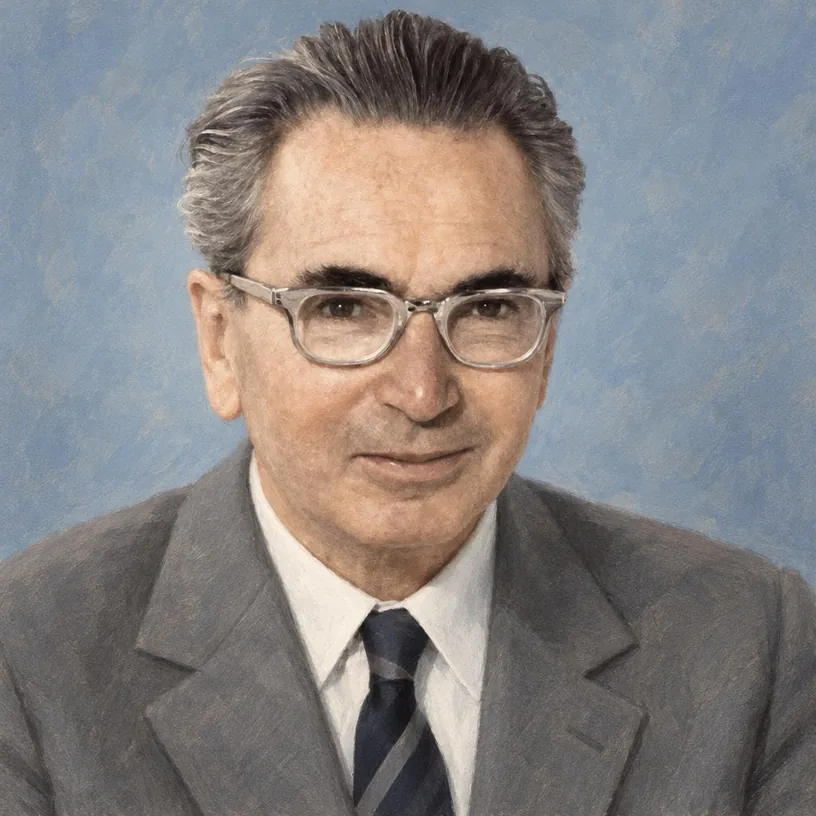
Viktor Frankl was a Viennese psychiatrist developing his approach to meaning before he was deported to Nazi concentration camps. He survived the Holocaust, while his wife and other close family members were murdered. His later book, Man's Search for Meaning, combines an account of camp life with an introduction to logotherapy, his meaning-centered approach to psychotherapy.
That history must not be reduced to a motivational slogan. Survival depended on brutal external circumstances, chance and conditions prisoners could not control. Frankl's account is not evidence that those who died lacked purpose or chose the wrong attitude. Its value lies in his exploration of human dignity and responsibility under conditions no one should have faced.
Meaning is a response, not a trophy
We often imagine purpose as a single grand calling we must discover before life can begin. Frankl's approach shifts attention toward the particular demands of the present. A meaningful response might be caring for a child, doing necessary work with integrity or remaining present with someone who is grieving. Meaning need not look impressive to an audience.
He described routes to meaning through creative work or deeds, through experiences and encounters such as love, and through the attitude taken toward unavoidable suffering. These are possibilities rather than a checklist. At different stages of life, one route may become more available than another.
Do not confuse acceptance with surrender
The word unavoidable matters. Frankl did not argue that suffering is necessary for a meaningful life or that people should tolerate harm they can change. If pain can be treated, injustice challenged or an unsafe situation left, action may be the most meaningful response. Finding meaning in difficulty is different from romanticizing it.
Nor can everyone summon a helpful attitude on demand. Trauma, depression, illness and exhaustion can narrow a person's capacity to respond. Practical support and professional care may be necessary. Meaning can accompany that care; it is not a substitute for it or a test of someone's strength.
Look outward when you feel stuck
Constantly checking whether you feel fulfilled can become its own trap. Frankl emphasized directing attention beyond oneself: toward a person to love or a task worth doing. This does not mean ignoring your needs. It means that fulfillment may emerge while you are engaged in something valuable, rather than through trying to manufacture the feeling directly.
Imagine a discouraging week at work. You may not control a reorganization or someone else's opinion. You might still be able to help a colleague understand a task, make an honest decision or protect time with your family. These actions do not erase the larger problem, but they can keep your values present while you address it.
A practical reflection for today
Write down one difficulty you are facing. Separate what you can influence from what you cannot currently change. In the first column, choose a concrete action or a person who can help. In the second, name a value you want to preserve: patience, honesty, compassion or courage. Avoid demanding that the situation suddenly feel good.
Then ask a smaller question than 'What is my life's purpose?' Ask 'What needs my attention today, and what response would I respect tomorrow?' Send the message, seek the support or finish the necessary piece of work. The answer may be modest, but it can still be meaningful.